

Khumo Makame
The launch of the EE-Phepha Buyback Center, an e-waste recycling pilot project in Ga—Segonyana Local Municipality in Mothibistad, Kuruman, marks a significant step towards improving waste management and unlocking economic opportunities in the Northern Cape.
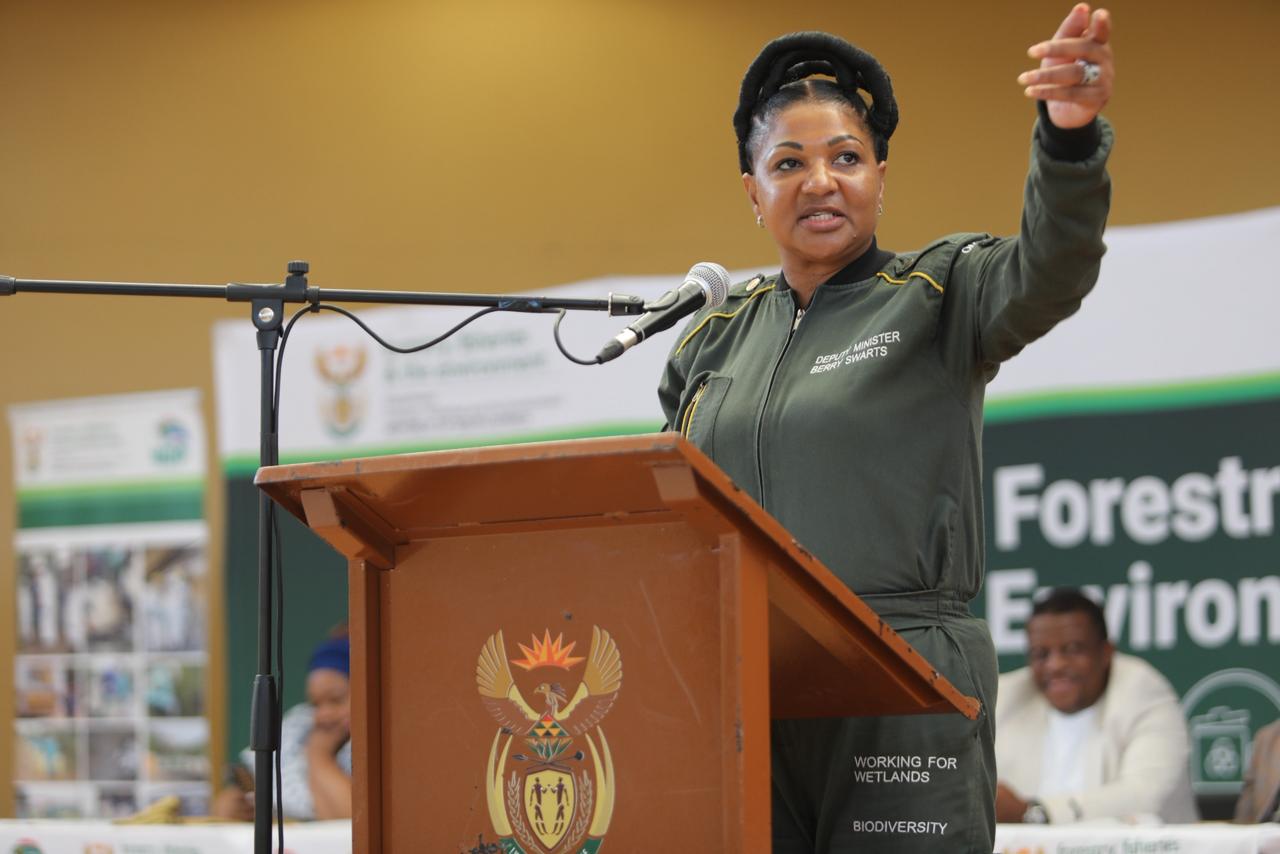
EE-Phepha was launched on 16 April by Deputy Minister of the Department of Forestry, Fisheries and Environment, Bernice Swarts, in the presence of community members. The facility, situated at Thabo Moorosi Multi-Purpose Centre encourages community members to exchange their e-waste for cash. E-waste, consisting of discarded, broken or obsolete electrical appliances and electronic devices, such as phones and computers, is currently the fastest-growing waste stream globally.
South Africa generates more than 360,000 tonnes of e‑waste annually, yet only a small proportion is formally recycled. The prohibition of e‑waste disposal to landfill, together with the introduction of Extended Producer Responsibility regulations, reflects the government’s clear intent to divert this waste stream towards recovery, recycling, and reuse.
In the Northern Cape, waste management challenges are compounded by limited infrastructure and low levels of public awareness around e‑waste recycling. EE-Phepha responds directly to these realities by establishing accessible collection systems while strengthening community participation and accountability.
Swarts warned that improper disposal poses serious risks to both human health and the environment. “Electronic waste contains hazardous substances that pose serious risks to human health and the environment if not managed correctly,” she said.
The project is a collaborative effort involving national and provincial governments, industry partners and SMMEs. Community involvement is critical to the success of this initiative. By providing drop‑off points and targeted awareness activities, the department is working to embed responsible waste separation and recycling practices at household level.
This approach enables better coordination across government spheres and ensures that on-the-ground implementation aligns with national policy and regulatory frameworks.
Beyond environmental benefits, the initiative is expected to create jobs, develop skills and support small businesses in the area. Swarts emphasized the importance of collective action, calling on residents and stakeholders to actively participate.
This pilot project also supports the objectives of the National Waste Management Strategy and advances provincial priorities to reduce waste to landfill, increase recycling rates and promote inclusive economic growth.
Progress will be monitored through clear indicators, including the volumes of e‑waste collected, levels of community participation and employment opportunities created. These lessons will inform future expansion and policy refinement.
If successful, the pilot could serve as a model for other municipalities in the Northern Cape, helping to reduce waste to landfill while building sustainable local economies.

Comments are closed.