

Boipelo Mere
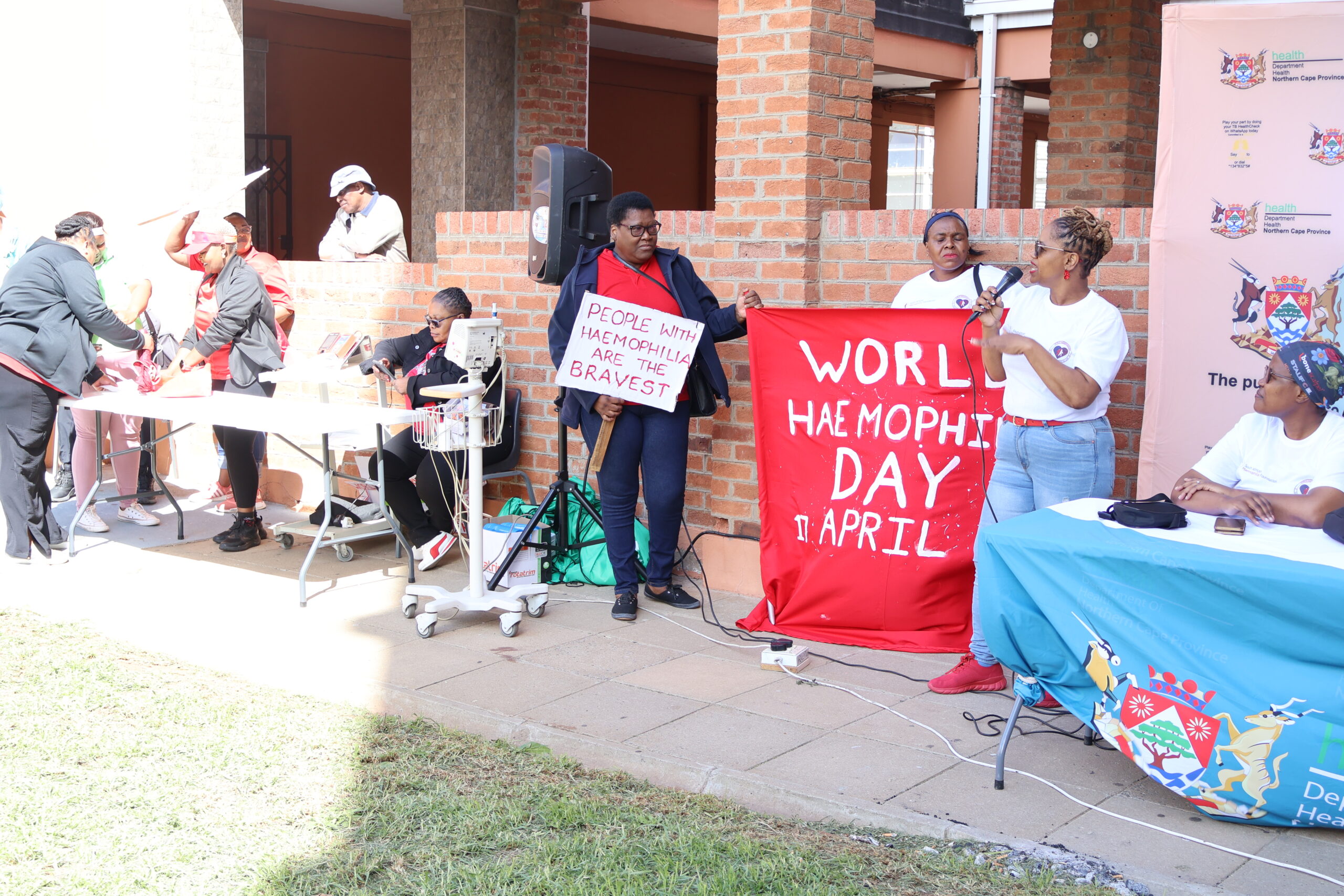
Employees, patients and friends of Robert Mangaliso Sobukwe Hospital participated in commemorating World Haemophilia Awareness Day on 17 April at the hospital premises. The day started with a session of aerobics.
Haemophilia is a rare, inherited bleeding disorder where blood cannot clot properly due to a deficiency in clotting factors VIII (A) or IX (B). It causes prolonged bleeding and often, severe internal, joint or muscle haemorrhages.
It primarily affects males due to X-linked inheritance, and is treated with replacement therapy to prevent or manage bleeding.
Its key symptoms include deep muscle bleeding leading to swelling, numbness, or pain.
A patient may also experience painful bleeding into the joints (such as the knees, elbows, and ankles), which can lead to chronic damage or arthritis.
They further experience long-lasting bleeding from minor cuts, tooth extraction, or surgery, easy or unexplained bruises, including bleeding into the brain or throat, which can be fatal.
It was estimated during the event that over three-quarters of people with Haemophilia globally remain undiagnosed.
The event was organised by the World Federation of Haemophilia(WFH) founded in 1989, this was the third year that the Kimberley branch commemorated this day.
This allowed Haemophilia patients an opportunity to participate and share their life experiences to increase awareness.
The oldest carrier at the event was 67-year-old Mpho Masilo and the youngest was a 16-year-old girl who preferred to remain anonymous.
Health workers provided a range of screenings, such as blood pressure and diabetes, while SANBS members collected blood from donors.
Old Mutual and Sanlam also erected information-sharing stalls at the venue.
Sharing her testimony at the event, Masilo said she only learnt that she has haemophilia after the birth of her second-born, who is now 49 years old.
She said her son developed swelling on his thigh after immunisation when he was a few months old.
“I rushed him to the hospital, where we were required to get tested with his father. I was the one who tested positive. My parents were also called in to test in order to verify the origin of the genes. My mom tested positive,” said Masilo.
Masilo applauded the hospital for prioritising their condition and initiating testing to determine the root cause.
She explained that it was only then that it made sense to her why she had been experiencing heavy flow during her monthly periods. “They explained everything to me, and it all made sense. My son grew up as a fragile child who could not participate in sports because of the swelling. I had to inject him three times a day to control the swelling. I applaud the hospital because I have never experienced neglect or run short on treatment. Even my oldest son understood our situation and could help his brother in my absence,” said Masilo.
She said she went through exactly the same process with her lastborn, who is now over 18 years old and can now take care of himself, including collecting his own treatment.

Comments are closed.