

Boipelo Mere
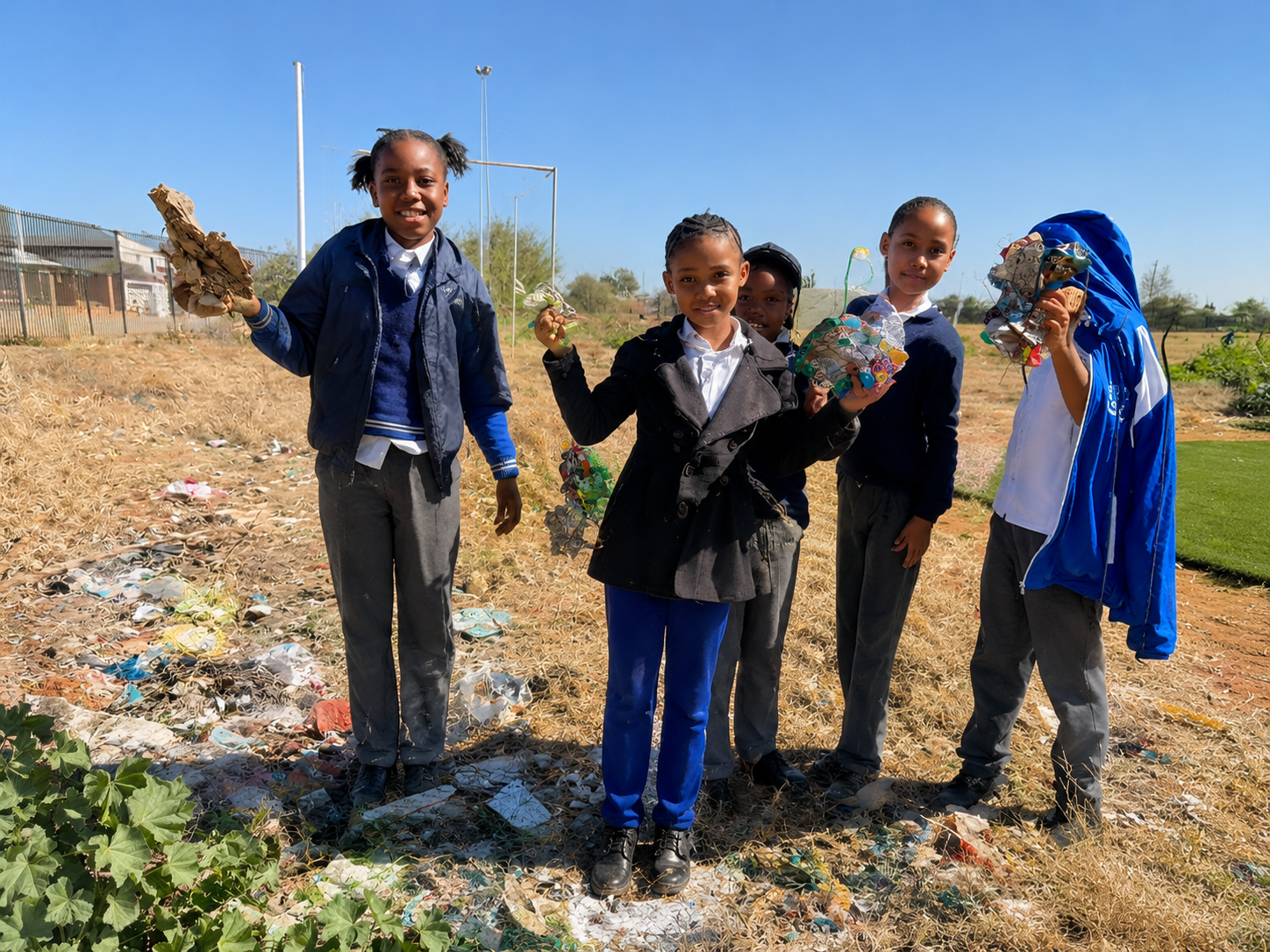
More than 1,000 learners from two schools around Kimberley are gaining the knowledge and practical skills to care for their school environments and contribute to a healthier, more resilient community through a newly launched environmental learning and action programme.
Delivered in partnership with WESSA Eco-Schools, and funded by Droogfontein Solar Power, the initiative empowers young people to take meaningful action on environmental challenges while building confidence, leadership skills and a sense of responsibility for the world around them.
It was officially launched at Waterworks Primary School and Beacon Primary School in June 2026.
The roll out of this programme, which forms part of Droogfontein Solar Power’s socio-economic development programme, also supports long-term behaviour change.
By working with schools, it reaches learners, teachers, their families and the wider community.
The initiative includes a range of initiatives, such as teacher training and capacity building, environmental education, eco-club establishment, recycling initiatives, food gardens, composting, waste reduction, upcycling, eco-brick projects and learner-led green business opportunities.
It prioritises environmental and socio-economic challenges identified through baseline assessments at both schools, including poor waste management, limited recycling opportunities, water-related challenges, food security concerns, resource constraints and the absence of formal environmental programmes or eco-clubs.
The Economic Development Specialist at the solar facility, Noluthando Mazibuko, expressed how rewarding it is to see how eager the learners are to participate in the programme, and shared why environmental education is an investment priority.
He highlighted that many of the older learners immediately began discussing how to establish the food gardens, which fruits and vegetables are best suited to Kimberley’s climate, and what it means to become eco-warriors.
“Their excitement and willingness to get involved shows that the programme is already inspiring positive action,” said Mazibuko.
“As a producer of clean, renewable energy, supporting a programme like this aligns naturally with our purpose. We are delighted to help create cleaner, healthier and more resilient school and community environments, while helping to nurture the next generation of environmentally responsible young leaders.”
With the introductory phase of the programme now complete, the next phase focuses on establishing eco-clubs and implementing learner-led environmental projects at both schools.

Comments are closed.